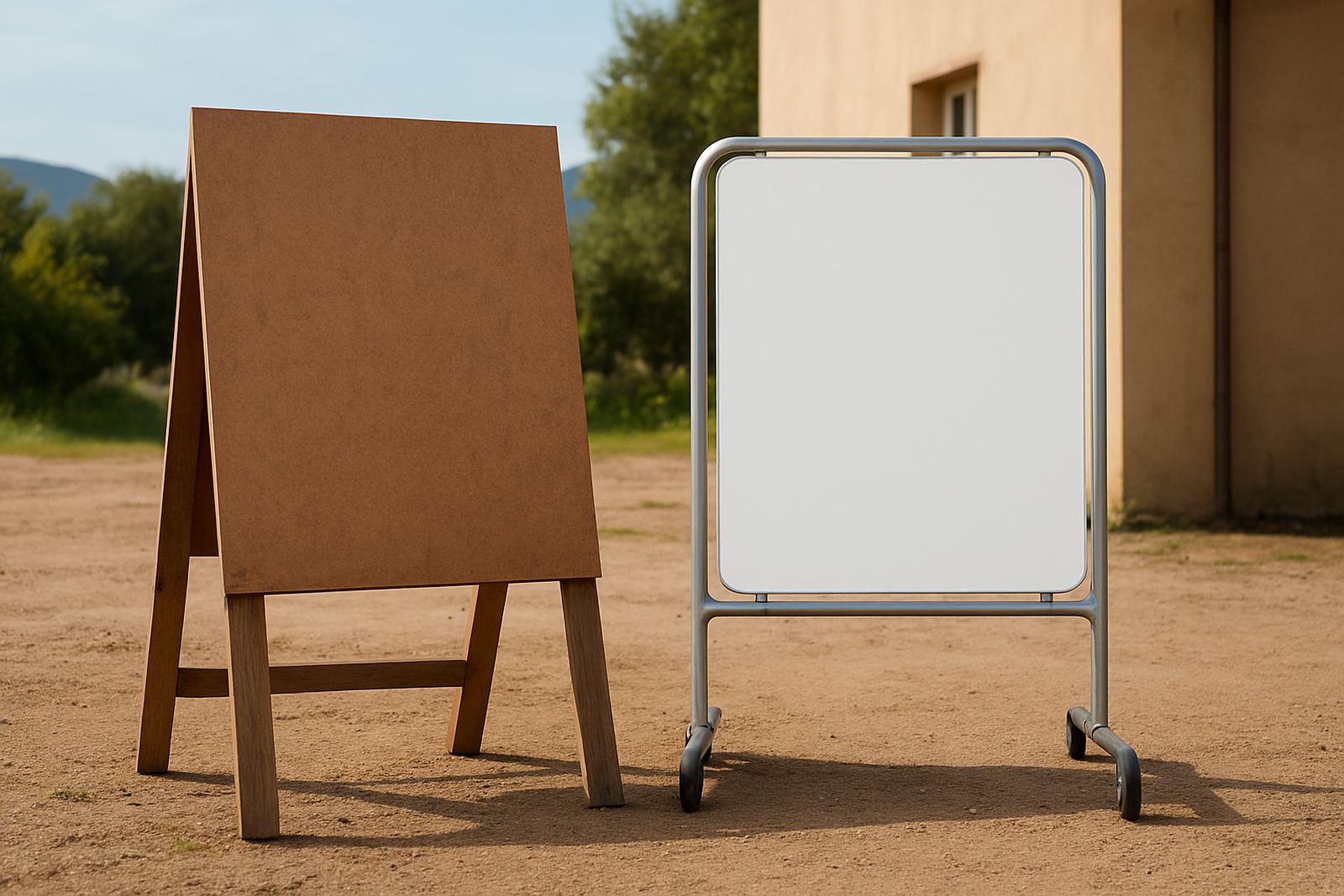
Start with the job, not just the artwork
A sign is not only about how it looks on day one. It also has to suit the purpose of the job, the site conditions, and the time it must stay in place. A weekend sale in Paarl needs a very different approach from a shopfront update in Wellington or a road-facing sign that must hold through summer heat, wind and dust.
Temporary signs are usually for a set period, such as a promotion, event, open day or seasonal message. Permanent signs are chosen when the message must stay visible for months or years. That sounds simple enough, but many problems start when the wrong material is used for the wrong location. A light board can buckle in the wind. A sticker can fail on a rough surface. A banner can fade quickly if it sits in full sun the whole day.
The best approach is to ask where the sign will live, how people will view it, and what kind of wear it will take. Is it indoors or outdoors? Will it be moved often? Does it face coastal humidity, road spray or direct sun? Those details matter just as much as the artwork.
When temporary really is the smarter choice
Temporary signage is ideal when the message changes often or when the budget must stretch across several campaigns. It works well for markets, school events, property launches, short term promotions and seasonal specials. In these cases, paying for a long life span may not make sense if the message will be removed within weeks.
Common temporary options include banners, correx style boards, removable vinyl stickers and window graphics. These are practical for quick installs and easy updates. A banner can be put up for a weekend event, then rolled away for storage. A removable sticker can carry a promotion through December and come off cleanly in January if the surface was prepared properly.
- Best for short runs and price-sensitive campaigns
- Good for changing dates, prices and event details
- Useful when the sign will be stored and used again
- Handy for indoor promotions or sheltered outdoor spaces
For temporary work, the finish still matters. Even a short term sign should be printed clearly, cut neatly and installed straight. If a banner is going up at a roadside entrance in Franschhoek, it still needs proper eyelets and secure fixing because wind can lift a loose corner very fast.
What permanent signs need to handle
Permanent signs must do more than look tidy. They need to withstand sun, rain, dust, cleaning and regular public contact. In the Boland, that can mean strong afternoon sun, cold winter mornings and a fair amount of wind. In coastal or damp areas, moisture can also affect the life of the material and the fixings.
For longer life, we normally look at rigid boards, fabricated signs, light boxes, applied vinyl on suitable substrates, and window graphics that are meant to stay in place. Vehicle graphics are another permanent category, but they need the right film, the right surface prep and careful installation if they are to last through daily driving, washing and parking in the sun.
Permanent signage should also be readable from the correct distance. A sign for a warehouse yard in Wellington may need large lettering and bold contrast so drivers can spot it early. A reception sign inside a building can use finer detail, but it still needs a clean finish and colour accuracy.
- Choose UV resistance for strong sun exposure
- Use sturdy substrates where wind pressure is likely
- Check fixings for rust risk near moisture and irrigation
- Allow for cleaning, repairs and future updates
How location changes the material choice
Two signs with the same artwork can need very different builds if one sits on a shaded wall and the other faces the afternoon sun. In Paarl and surrounding towns, temperature swings are common, so material movement can cause lifting, curling or cracking if the product is not suited to the site. A sign near a busy road also needs to hold up against dust and constant vibration from traffic.
For street-facing signs, consider how far away the viewer will be. A driver passing through Klapmuts does not have time to read small text. A pedestrian at a shopfront in Simondium can take in more detail, but only if the sign is at eye level and free from glare. In areas where there is wind tunnel effect between buildings, lighter signs may need extra support and stronger mounting.
Local rules can also affect the type and size of sign you use. Some properties need permission from landlords, municipalities or body corporates, especially for projecting signs, large banners or window coverage. It is better to check early than to redo the job later.
A practical local example from the Boland
Take a small business in Wellington that wants a special promotion for a three week summer campaign. They need something visible from the street, but they also want to remove it once the campaign ends. In that case, a printed banner or removable window graphic may be the right answer. It gives strong visibility without committing to a long-term structure that will sit there after the offer has ended.
Now compare that with a motorbike rider group in Paarl needing decals for regular use and club identity. Those graphics are exposed to sun, washing, road grit and daily handling. A more durable vinyl with proper lamination is the better choice. It costs a bit more up front, but it lasts longer and looks better over time.
For a retail site in Worcester, a light box or permanent fascia sign might make more sense if the trading hours extend into the evening. The sign then has to work after dark too, not just in daylight.
The point is simple: the right sign is the one that matches the actual use, not just the first idea that comes to hand.
Questions to ask before you order
Before you commit to a sign, it helps to answer a few straight questions. These guide the material, the finish and the installation method, and they can save money later on.
- How long must the sign stay up?
- Will it be indoors, outdoors or on a vehicle?
- Will it face full sun, wind, rain or shade?
- Does the message change often?
- Will the sign be moved, stored or reused?
- How far away will people view it from?
If you can answer those points, the material choice becomes much easier. A short campaign may only need a temporary print, while a long term business sign may need stronger board, better lamination and proper mounting. The same thinking applies to safety signs, parking signs, shop promotions and vehicle graphics.
Why a proper match saves money later
The cheapest option is not always the least expensive in the long run. A sign that fails early often needs a reprint, new fixing hardware or another installation call-out. That is time and money lost. A sign that is matched properly to its job can stay neat for longer, which means fewer updates and less hassle for the client.
Good sign planning also protects the brand image. Faded colours, peeled edges and crooked installs send the wrong message, even if the product itself is excellent. In a busy commercial area, people notice those details quickly.
For businesses across Paarl, Wellington, Stellenbosch, Franschhoek, Worcester and Malmesbury, the safest route is to choose the sign by use case first. Temporary where the message will change, permanent where the message must stay. That simple decision makes the rest of the job easier, and it usually leads to a cleaner result that lasts the way it should.