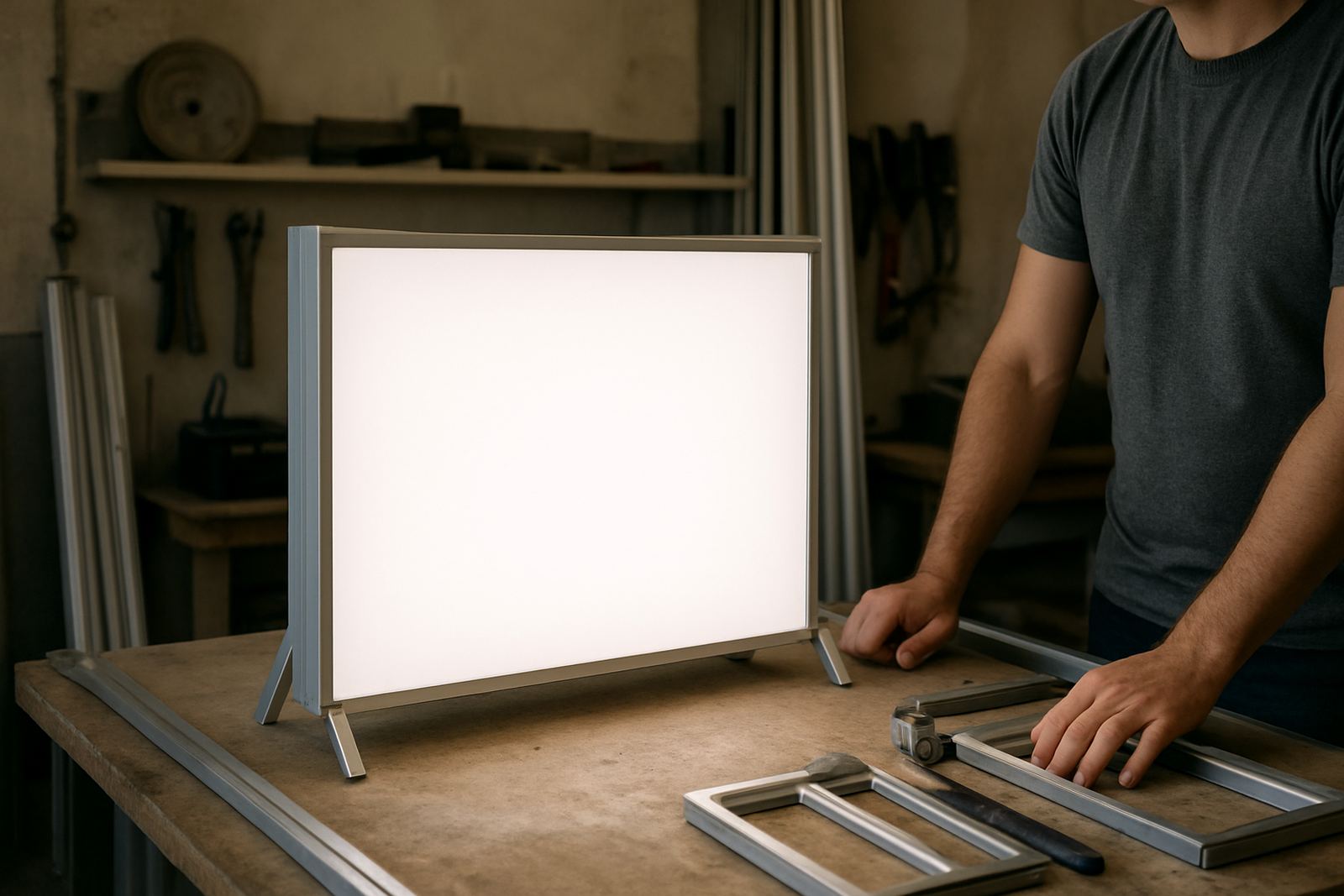
What a Light Box Does For Your Signage
A light box is a framed sign cabinet with an internal light source and a face panel that carries your artwork, logo or message. In simple terms, it lets your sign work after sunset and on overcast days, which matters for shopfronts, forecourts, entrances and service businesses that need passing traffic to see them quickly. A well made box gives even lighting across the face, so your name stays legible from the road and at close range.
These signs are used on building facades, above doors, on pylons, inside malls, and in places where visibility drops early because of shade, rain or load-shedding. For coastal areas and dusty roadside sites, the construction matters just as much as the graphic. We build for local conditions, with materials and fixings chosen to suit wind, sun and everyday use.
- Clear visibility in daylight and at night
- Useful for shopfronts, forecourts, entrances and unit numbers
- Suitable for indoor and outdoor mounting
- Can be made single-sided or double-sided
Sizes, Faces And Build Options
Light boxes are made to suit the wall, fascia or frame they will sit on. Common sizes start from compact boxes for entrance signs and can extend to larger shopfront signage for visible street presence. The face can be printed with your branding, cut vinyl or a combination depending on the look you want and the viewing distance. We also make deeper boxes where extra brightness or stronger structure is needed, and slimmer units where space is tight.
Typical build options include aluminium framing, steel backing, acrylic or polycarbonate faces, LED illumination, weather sealed edges and removable panels for maintenance. We can also make the box in a shape that suits the artwork, such as square, rectangular or a custom profile. If the sign will face strong sun, wind or salty air near the coast, we will look at the right face material and sealing method so it lasts longer.
- Custom width, height and depth
- Single or double sided face panels
- Internal LED lighting for lower power use
- Face options include translucent print, cut vinyl or combined graphics
- Wall mounted, bracket mounted or frame mounted
Where Light Boxes Work Best
Light boxes suit businesses that need their name to stand out in busy streets, busy courtyards or darker trading areas. They are a practical choice for retail shops, takeaways, medical rooms, service counters, bottle stores, hardware yards, forecourt kiosks and business parks. They also work well for directional signage at entrances, especially where municipal by-laws or body corporate rules limit how much space you have for a sign board.
In Paarl, Wellington, Stellenbosch, Franschhoek, Worcester, Malmesbury, Klapmuts and Simondium, we see them used where traffic moves quickly and a sign has only a few seconds to do its job. If your site sits back from the road, or if nearby trees, awnings or parked vehicles block view lines, an illuminated box can make a big difference. It is useful where the business closes late too, because your name still stays visible after dark.
- Shopfronts and street-facing entrances
- Forecourts, service yards and roadside businesses
- Retail centres and shared commercial parks
- Indoor reception or directional signs
- Night trading locations and low-light sites
Installation, Power And Site Checks
Before fitment, we check where the sign will be fixed, how it will be powered and what access is available for installation. Light boxes need a sound mounting surface, correct cable routing and a power supply that suits the lamp load. Most current builds use LED modules because they draw less power, run cooler and are better for long hours of operation. Where a site has load-shedding, it is worth considering backup power if the sign must stay lit through the evening.
Installation may involve wall anchors, channel supports, brackets or a steel subframe depending on the surface and size of the box. On commercial buildings we also look at the height of the sign, weather exposure and whether the wiring can be hidden neatly. For larger roadside signs, a firm base and proper access for maintenance are important. A loose mount or poor electrical connection can shorten the life of the unit and create a safety problem, so the prep matters as much as the finish.
- Check the mounting surface is sound and level
- Confirm power point location and cable route
- Allow for safe access during fitment and servicing
- Ask about timer, switch or photocell control if needed
Care, Cleaning And Ongoing Servicing
Light boxes do not need complicated care, but they do need regular attention. Dust, spider webs and road grime can build up on the face and reduce brightness. A gentle wash with mild soap and soft cloth is usually enough. Avoid harsh solvents and abrasive pads because they can scratch the face or damage printed graphics. In coastal air, it is also wise to inspect seals and fixings now and then so corrosion does not catch you out.
If the sign starts to look dim, flickers, or has dark spots, it may be time for a service. Sometimes the issue is a loose connection, sometimes it is a failed LED module or a worn power supply. We can inspect, rewire, replace parts or refresh the face if the artwork has changed. That is often better than replacing the whole unit, especially for businesses that need a quick update with minimal downtime.
- Clean the face with mild soap and soft water
- Check seals, brackets and screws after heavy wind or rain
- Replace damaged graphics before they fade badly
- Book servicing if brightness drops or sections go dark
What To Check Before You Order
To quote the right light box, we need the finished size, where it will be installed and what the sign must say. It helps to know whether the box will be viewed from traffic, pedestrians or both, because that affects the letter size and brightness needed. If you already have artwork, send the file in a usable format. If not, we can help with layout, artwork checks and the sign prep so the final result prints correctly and fits the cabinet.
Please also think about whether the sign needs to be single or double sided, whether it must match existing branding, and whether you need installation or only the manufactured unit. If the box is for a business park, mall or shared site, check the local rules first. Some sites have limits on projection, brightness or after-hours lighting. A few basic checks upfront save time and keep the job moving without delays.
- Finished width, height and preferred depth
- Single sided or double sided use
- Artwork, logo or wording to appear on the face
- Mounting surface and installation height
- Power access and any site restrictions
Key facts
| Typical sizes | From compact entrance boxes to larger shopfront signs, made to order |
|---|---|
| Lighting | Low power LED illumination for even light and reduced heat |
| Face material | Translucent acrylic or polycarbonate, depending on site and use |
| Frame options | Aluminium or steel construction with weather-sealed edges |
| Mounting | Wall mounted, bracket mounted or frame mounted |
| Use case | Shopfronts, forecourts, entrances, retail parks and indoor directional signs |