What One Way Vision does on glass and rear windows
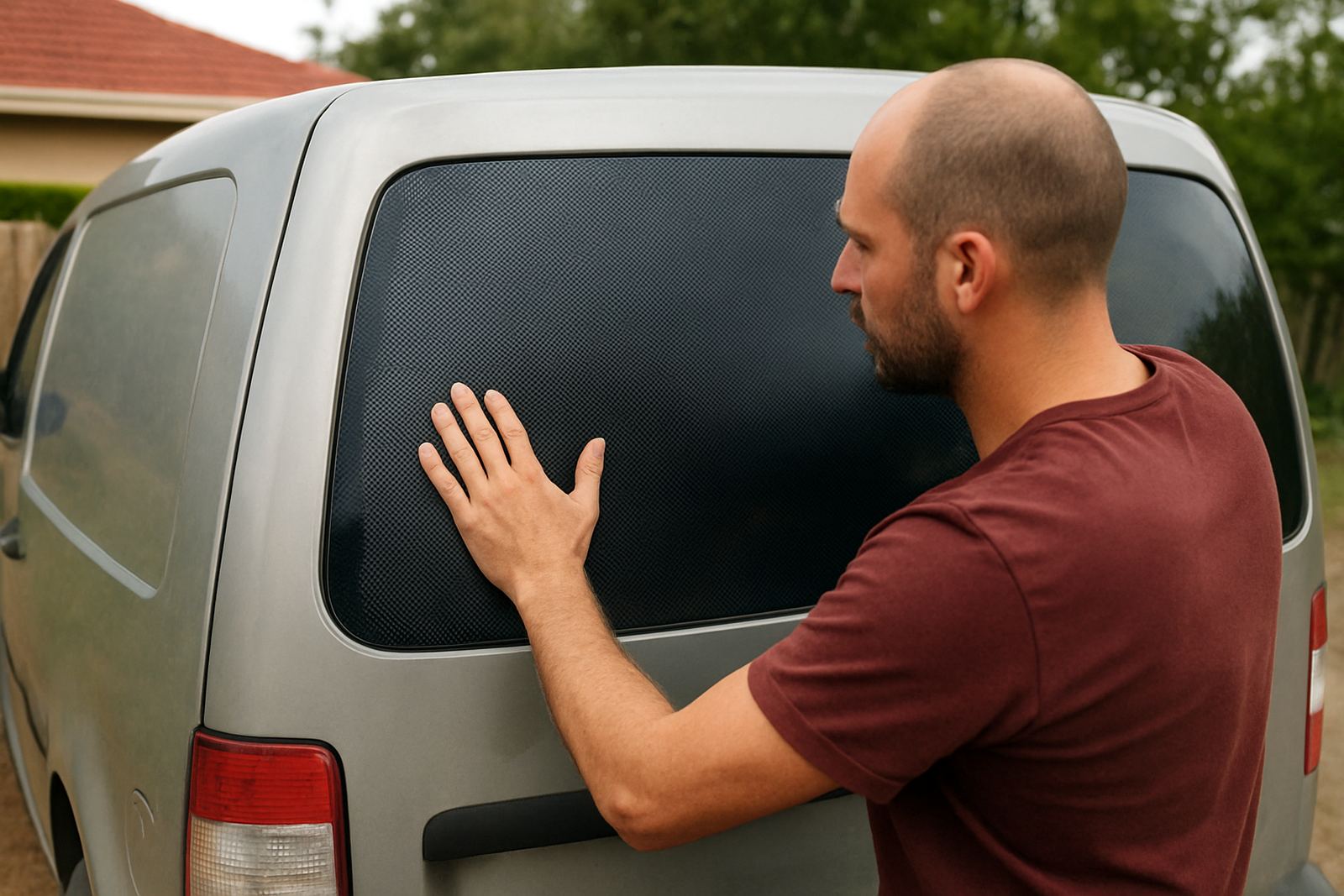
One Way Vision is printed on a perforated film with tiny holes across the face of the material. From the outside, those holes read as a solid image, so your logo, service list or campaign message shows clearly. From the inside, the film still allows outward visibility, which is why it suits rear vehicle windows and shop glazing that gets strong sun through the day.
For business owners in Paarl, Wellington and surrounding towns, it gives you a useful balance between advertising and visibility. On vehicles it can turn the back window into moving signage. On shopfront glazing it can soften glare, add privacy at street level and carry seasonal offers or opening hours without blocking light completely.
We print each job to suit the glass and the viewing distance. A simple logo with bold lettering works well on a small rear window, while a longer message or image can be set up for larger glazing in retail, offices or service counters. It is also a good option where plain stickers would feel too closed off, or where full tint would be too dark for daily use.
Sizes, print area and finish choices
One Way Vision is usually supplied as a custom cut graphic, made to the exact window size or with a neat border all round. We can work from measurements, a template or a fitted vehicle panel if the job needs extra accuracy. Standard widths are limited by the roll, so larger panels are made up in sections where needed, with joins placed to keep the image looking tidy.
- Custom cut to rear vehicle windows, side glass or shopfront panels
- Single panel or tiled sections for large glazing
- Gloss printed face for strong colour and clearer visibility from outside
- Lamination available where the panel will face heavy handling, dust or regular washing
- Optional contour cutting for logos, shapes and framed text blocks
The best results come from strong contrast and clear type. Fine detail can print well, but it should not be too small if the viewing distance is long or if the glass is heavily curved. We also check the placement around heaters, demisters, wipers and window seals so the film sits properly and does not interfere with daily use.
Where One Way Vision suits best in the Boland
One Way Vision works well on bakkies, panel vans, delivery vehicles, rideshare vehicles and private motorbikes with rear glazing inserts. It is also useful on office fronts, salons, clinics, estate agencies, showrooms and roadside service counters that get a lot of western sun. In Paarl and Worcester, for example, afternoon heat can be hard on plain vinyl, so a perforated film is often a smarter choice for glass that needs to stay usable.
It suits businesses that want visibility without a full blackout look. You can advertise services, opening times, after-hours contacts or a short campaign message while still keeping light inside. On shopfronts it can also help reduce the feel of being exposed from the street, which is handy in busy trading areas or where municipal rules limit how much signage can cover glazed areas.
For commercial vehicles, it is especially useful where the back window is part of the branding plan but rear vision still matters. That makes it a good fit for drivers who spend long hours on the road between Stellenbosch, Franschhoek, Malmesbury and beyond.
Fitment, power use and site conditions
One Way Vision itself does not need electricity or gas. It is a printed film that is installed with hand tools, cleaning products and careful surface prep. For bigger projects, especially on shopfronts or fleets, we may use ladders, work platforms or controlled access after hours so the panels are fitted without interrupting trade. If the job includes backlit signage, that electrical work is handled separately, but the perforated film on glass does not draw power.
Preparation matters. Glass must be clean, dry and free of polish, wax, silicone and dust before fitment. On vehicles, we work around demister lines, rubber seals and edge curves so the film bonds correctly. On shopfronts, we check for chips, tinted film already in place, UV age, and any local restrictions on window coverage. Coastal humidity can also slow drying times, so in areas closer to the Cape winelands valley and mistier mornings, we allow for proper curing before the surface is put back into regular use.
- No electricity or gas needed for the film itself
- Best fitted in dry conditions, out of direct wind and dust
- Needs proper surface prep for adhesion to hold
- Can be installed on vehicles, fixed glass and many flat shopfront panes
- May need after-hours fitting for active trading sites
Care, cleaning and service life
With sensible care, One Way Vision can stay presentable for a long period, especially when it is washed by hand and not blasted with high pressure. The print faces the outside, so road grime, salt air and dust will collect there first. A soft cloth, mild detergent and gentle rinsing are usually enough. Avoid harsh solvents, scouring pads or aggressive pressure washing along the edges, as that can lift the film over time.
On vehicles, the film lasts best when the glass is not scraped with sharp blades and when the edges are checked after long trips, rain and repeated window use. On shopfront glass, we recommend regular cleaning that follows the grain of the print and not across it with too much force. If a panel gets damaged, faded or marked by building work, we can replace the affected section or update the artwork without redoing the whole surface.
If you are running a fleet or managing a shop with changing specials, it is worth asking about reprints and updates at the ordering stage. That keeps future changes simple and cuts down on downtime.
What to check before you order One Way Vision
To get a clean result, a few details need to be right before we print. The size of the glass, the viewing direction and the purpose of the graphic all affect the layout. A rear window on a delivery vehicle needs different artwork from a retail window facing full afternoon sun. If the panel must be read from a passing car, the type needs to be bold enough for quick reading and the design should avoid clutter.
We also need to know whether the surface is flat or curved, whether there is existing tint, and whether the panel must match a full vehicle wrap or other signage on the same site. If you are ordering for a commercial property, check whether the building body corporate or landlord has any rules on coverage, visibility or branding over glass. It saves time later, and helps keep the installation smooth.
- Exact measurements of the glass area
- Vehicle make, model and window position, if applicable
- Where the graphic will be viewed from
- Whether you need privacy, branding or both
- Any existing tint, decals or frost already on the glass
- Artwork in a usable format, or a clear brief for layout help
When the details are clear, the result is neater and the fitment goes faster. A proper measure-up also helps us decide on the right panel layout so the finished job looks tidy from the road and still works from inside.
Key facts
| Material | Perforated adhesive vinyl for glass and vehicle windows |
|---|---|
| Visibility | Printed face outside, outward visibility from inside |
| Typical use | Rear vehicle windows and sun-facing shopfront glazing |
| Custom sizing | Made to exact measurements or fitted templates |
| Finish options | Gloss print, contour cutting, lamination if required |
| Power / gas needs | None for the film itself; fitting uses manual tools only |