
Why rider graphics need gentler washing than the rest of the bike
Most bikes get washed with the same cloth, brush and soap from front to back, but rider graphics need a lighter touch. Vinyl stickers, printed decals and laminated helmet graphics can handle normal cleaning, yet pressure, harsh chemicals and rough scrubbing shorten their life. In the Boland, where bikes collect dust on gravel roads and grit after a windy day in Paarl, that grit acts like sandpaper if you go in too hard.
The first thing to understand is that dirt is not the enemy, abrasion is. If you wash a motorbike with a strong degreaser and a stiff brush, you may still leave the tank clean, but the graphic edges can start to lift. On helmets the risk is even higher because the surface curves a lot and stickers sit over vents, edges and ridges. That means water can work under the film if the graphic has already been damaged.
Good cleaning habits protect the print, the laminate and the adhesive. They also help you spot small problems early, before a corner peels or a scratch turns into a tear.
The safest wash routine for printed bike decals
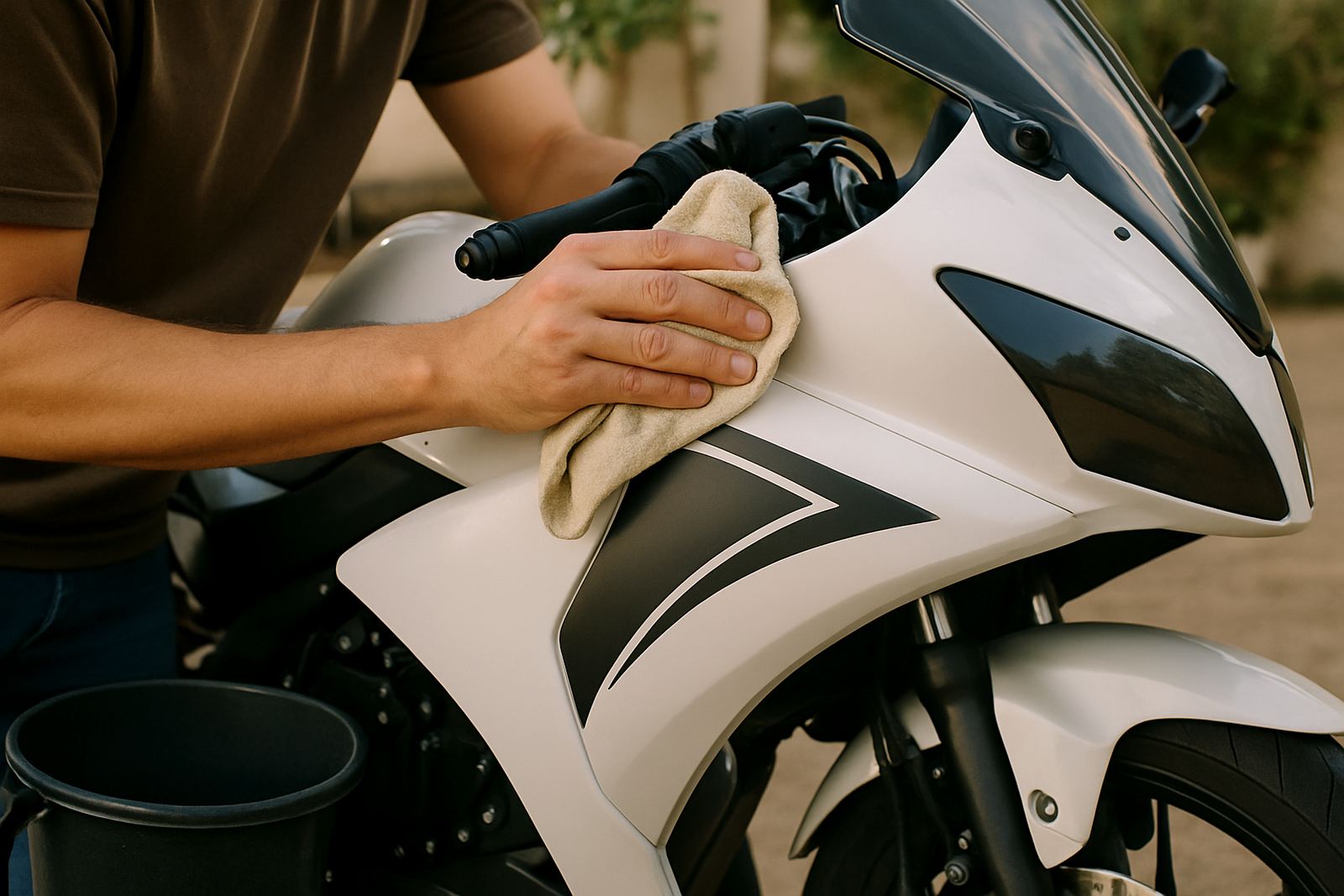
For regular washing, keep it simple. Use clean water, a mild soap and a soft sponge or microfibre cloth. Work from top to bottom so you are not dragging grime across the graphics again. If the bike has been through rain, mud or a long ride through Wellington or toward Worcester, rinse off the loose dirt first and let the worst of the grit fall away before touching the sticker area.
A soft touch matters more than speed. Let the soap do the work, then rinse with low pressure. If you use a hose, hold it back a little rather than blasting directly at decal edges. High pressure can force water into seams and around wrap joins, especially on fairings and tank curves. That is where a small lift can start, and once it starts it grows faster than most riders expect.
Drying is also part of the wash. Use a clean cloth and pat the surface dry rather than rubbing hard. If you leave water sitting on a helmet or bike panel in strong sun, mineral spots can build up and that makes the print look tired even when it is still in good condition.
What to avoid if you want helmet stickers to last
Helmet graphics need a bit more caution because the shell finish and the sticker laminate both matter. Many riders use the same strong cleaner on the visor, shell and decals, but some products leave a film or dry out the adhesive around the sticker edges. If you have a matte helmet finish, testing any product on a small hidden area first is a sensible habit.
Avoid these common mistakes:
- Do not use thinners, petrol or solvent-heavy cleaners on decals or helmet stickers.
- Do not scrub with rough pads, old brushes or abrasive cloths.
- Do not soak the helmet for long periods, especially around vents and seams.
- Do not peel at dirt with a fingernail or blade.
- Do not wash a freshly fitted graphic too soon after installation.
Fresh graphics need time to settle. If a decal was fitted recently, give it time before heavy washing so the adhesive can bond properly. That is especially important in warm weather, where the surface may look fixed but still needs a proper cure period.
How coastal humidity and summer heat change the job
The Boland has a mix of heat, dust and occasional coastal moisture coming in from the west, and that combination changes how rider graphics age. Summer heat can soften cheap adhesive and make edges more vulnerable. Humidity can also leave a fine film on the surface, which then traps dust. If the bike is kept outside, the graphic gets more weathering than a machine stored in a garage.
On the other hand, long dry spells bring fine dust that settles into panel joins and around helmet edges. Washing once a week may be enough for a weekend rider, but delivery bikes and commuting bikes often need a quick rinse more often. The trick is not to overdo it. Frequent gentle cleaning is better than one aggressive wash after the dirt has baked on for a month.
If a bike has been parked near the coast or used on salty roads, rinse it sooner rather than later. Salt residue can attack metal fittings and also sit under sticker edges. It is small things like this that make a graphic look older than it should.
A Paarl rider example from daily use to weekend rides
Think of a rider in Paarl who uses a bike for weekday deliveries and then heads out through Simondium and into the winelands on a Saturday. The bike picks up dust from the morning commute, then bug splatter after the ride, and maybe a splash of chain lube near the rear panel. If that rider uses one harsh wash at the end of the month, the graphics take a beating. If instead the bike gets a quick rinse, mild soap and soft cloth after the dirty ride, the decals stay brighter and the edges hold better.
That same routine applies to helmet stickers. Sweat, road dust and sunscreen can build up on the shell after a hot day. A gentle wipe down after riding keeps the surface cleaner and stops residue from drying around the edges. It also means the graphics keep their colour for longer, which matters when the helmet is part of a rider's visible look on the road.
For riders who want their graphics to stay neat through daily use, a simple rule helps: clean often, clean softly, and do not rush the drying. It sounds basic, but basic habits save a lot of reprints.
When a sticker needs repair, reprint or replacement
Sometimes washing reveals a deeper issue. If an edge keeps lifting, if the print has faded unevenly, or if a scratch has cut through the laminate, the problem will not go away with better cleaning. At that point a repair, update or full reprint is usually the better option. A small damaged section on a bike panel can catch more dirt and start a bigger peel, so it is worth dealing with early.
Look out for these signs:
- Edges lifting after every wash
- Colour loss on sun-facing panels
- Air bubbles that keep growing
- Scratches that catch a cloth or fingernail
- Water getting under the graphic
For riders in Paarl, Wellington and the wider Boland, the best time to replace tired graphics is before the busy season or before a long trip. That way the bike is clean, the helmet looks tidy and the new print gets a fair run before the next stretch of dust and sun.