What a vehicle wrap does for your daily work
A wrap is a printed and cut vinyl skin applied to painted panels, windows or selected panels on a vehicle. It can cover just the doors, bonnet, tailgate or rear quarters, or it can go full coverage across the bodywork. For tradespeople, couriers, sales teams and service vehicles, it gives you repeat visibility every time you park at a site, sit in traffic or drive between Paarl, Wellington, Stellenbosch, Franschhoek, Worcester and Malmesbury.
Wraps are useful when you want strong branding without respraying the vehicle. They suit new vehicles, late-model fleet vehicles and older vehicles that still have good bodywork. If the paint is sound and the panels are clean, a wrap can be fitted neatly and removed later when the vehicle is sold or the branding changes.
Vehicle graphics also help with practical identification. A branded bakkie or van is easier for customers to recognise at the gate, and on busy industrial roads it makes the vehicle look organised and professional. For many small businesses, that matters just as much as the advertising value.
Wrap options and sizes that fit common fleet vehicles
We make wraps to suit passenger cars, single cab and double cab bakkies, panel vans, canopies and delivery vehicles. The design can be as simple as a logo, contact panel and colour block, or as full as a complete change of body colour with printed graphics. Most vehicles are measured on site or from vehicle dimensions before the artwork is finalised, because door handles, curves, mirrors and fuel caps all affect the layout.
Typical wrap work includes partial side wraps, rear door graphics, bonnet branding, roof panels and full body coverage. A partial wrap is often a cost-effective option when the vehicle is already in use every day and you want visibility without covering every panel. A full wrap suits fleets, launch vehicles and businesses that need a stronger visual impact.
- Partial wrap: doors, tailgate, rear quarter panels or bonnet
- Full wrap: full body coverage with printed or colour vinyl
- Window areas: perforated contra-vision for rear and side windows where allowed
- Fleet sets: matching layouts across multiple vehicles
- Reflective or high-visibility additions for safety use on certain work vehicles
Where wraps suit best in the Boland
Wraps are a strong fit for builders, electricians, plumbers, couriers, motorbike riders, retailers, mobile service teams and local suppliers who spend time on the road. They also work well for vehicles that park at customer homes or business sites, where the branding has time to be seen. In the Boland, where vehicles often deal with strong sun, dust, summer heat and the odd wet winter morning, a properly fitted wrap can hold up well if it is cared for correctly.
For delivery vehicles, the wrap often serves two jobs at once: it tells people who is arriving and it helps protect the paint from everyday scuffs. For bakkies and vans, side panels are usually the most useful space because they are seen in traffic, on building sites and outside shops. On smaller cars, a simpler layout often works better, especially if the vehicle is used by more than one driver.
- Branding for customer-facing vehicles that travel daily
- Identification for fleet vehicles and service vans
- Promotional use for launches, events and seasonal campaigns
- Added protection for painted panels against minor marks and road grime
Installation, power use and what the fitting space needs
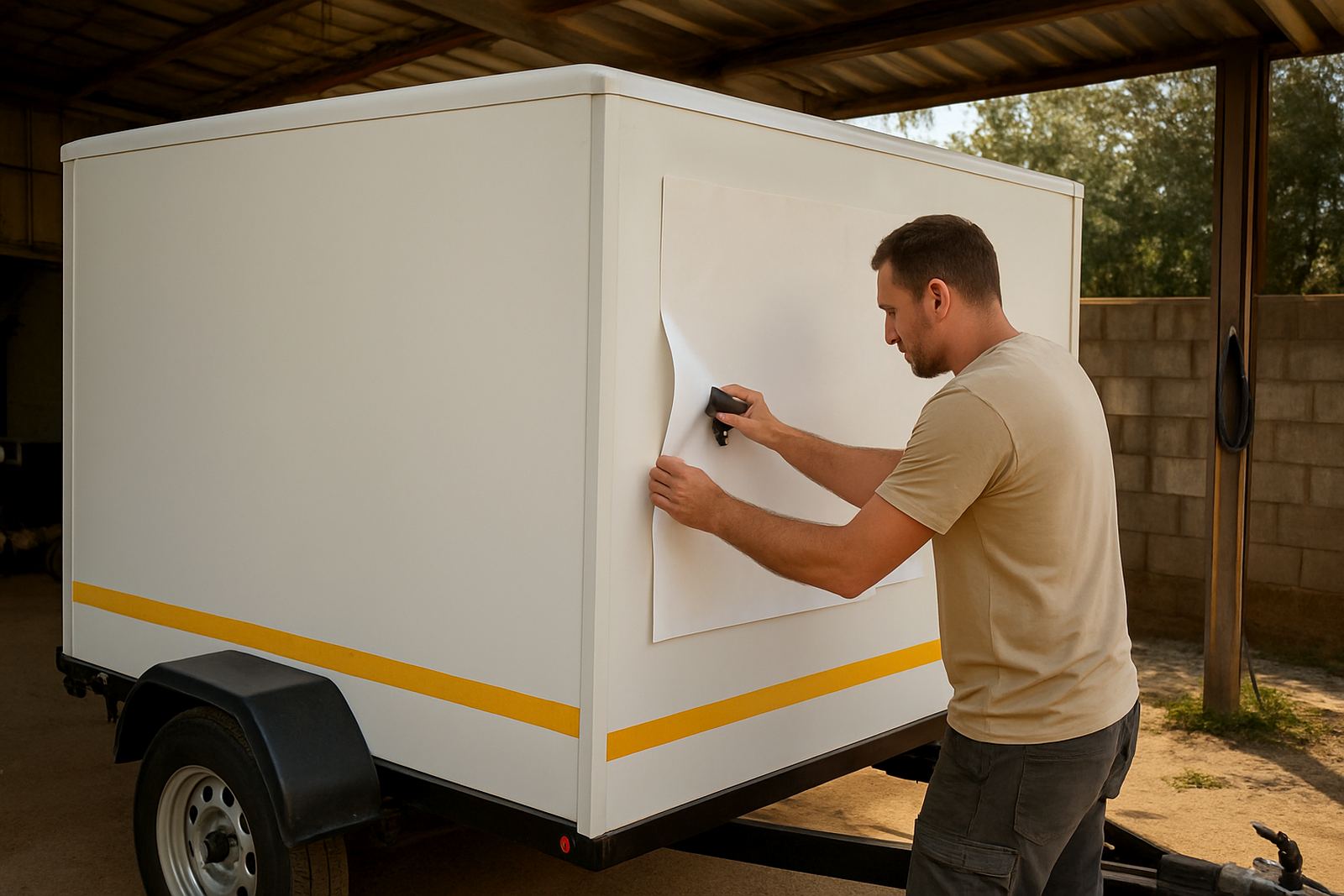
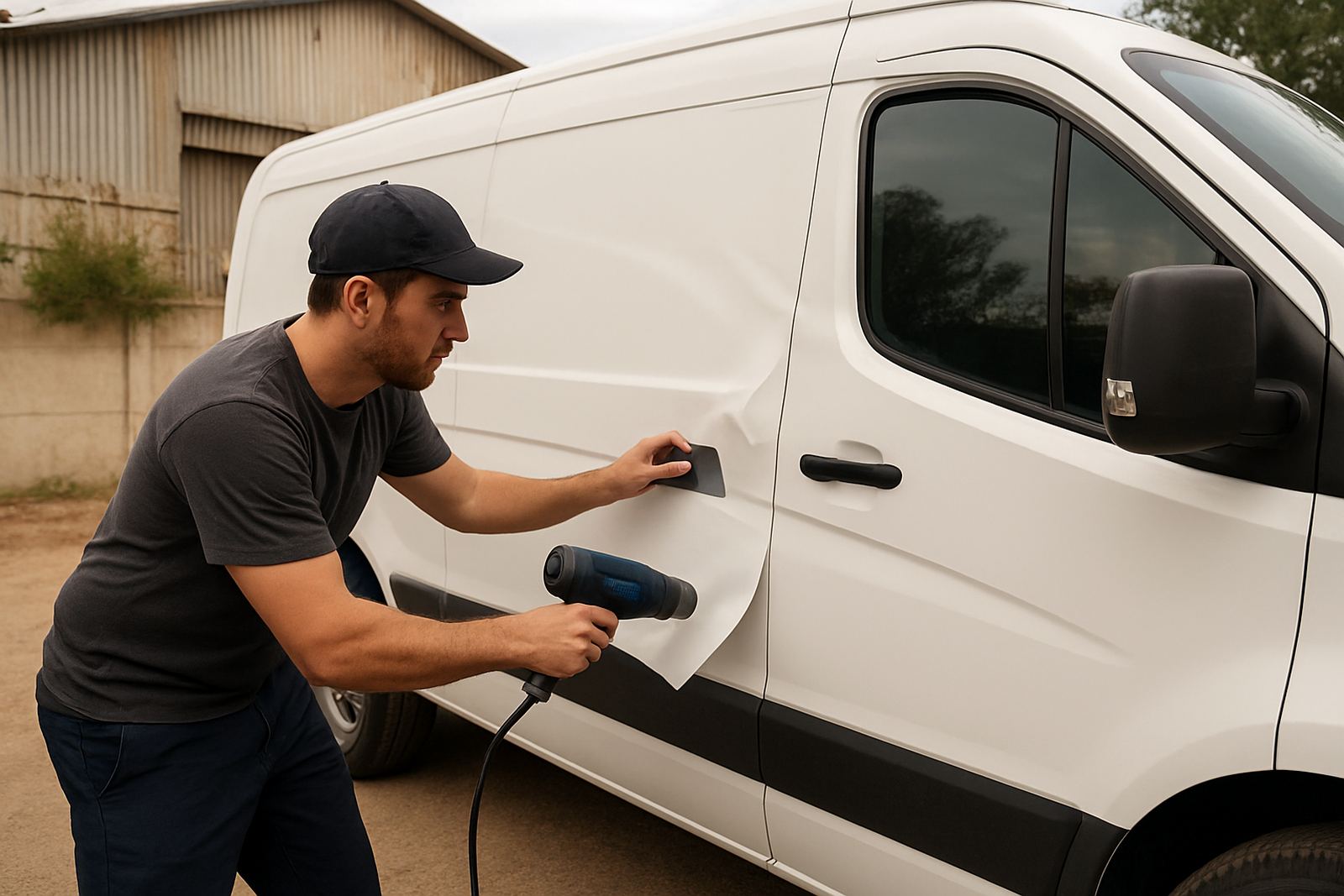
Vehicle wrap fitting is a clean, careful process that needs a dust-free work area, good lighting and enough space to open doors and move around the vehicle. We prep the bodywork first by cleaning, degreasing and checking for loose paint, dents or damaged trim. If the surface is not ready, the wrap will not last as long or sit as neatly. Installations are normally done indoors to keep out wind, dust and direct sun while the adhesive is being worked.
The fitting process does not need gas. It does need power for lighting, cutting equipment and preparation tools, and it benefits from a controlled indoor space especially during load-shedding or hot afternoons. On larger jobs, we plan the work so the vehicle can be booked in, completed and kept still long enough for the vinyl to settle properly. If a vehicle has recently been polished, repaired or sprayed, tell us before ordering because that affects adhesion and timing.
We also check how the vehicle is used day to day. If it is a company vehicle that cannot sit out of service for long, partial wraps may be the better choice. If it is a display vehicle or a dedicated sales vehicle, full coverage can be planned with more time for panel alignment and finishing.
Care, servicing and when to update the graphics
A wrapped vehicle should be washed by hand with mild soap and clean water. Avoid harsh solvent cleaners, strong degreasers and high-pressure washing right on the vinyl edges. In the Boland sun, it is wise to park under cover where possible and keep the vehicle clean after dusty roads or coastal humidity if you travel further west. A little care goes a long way, and the wrap will keep its colour and finish for longer.
We can also help with reprints and updates if your details change, such as a new contact number, new service area or updated logo. If one panel gets damaged in a scrape, often only that section needs replacing rather than the entire wrap. This is useful for fleet owners and drivers who need the vehicle back on the road quickly.
- Wash by hand and dry with a soft cloth or chamois
- Do not use abrasive pads, thinners or strong chemicals
- Keep pressure washers away from lifted edges and seams
- Let the wrap settle before exposing it to hard use
- Book a touch-up or panel replacement if damage appears
What to check before you place an order
Before we start production, it helps to confirm the exact vehicle model, year and body style, because door lines and window sizes change between versions. We also need the branding content to be correct before print, including spelling, phone numbers, service areas and any required legal markings. For certain business vehicles, especially those used on public roads, the layout should not block required lights, plates or windows where visibility is needed.
Good wrap orders are based on clear artwork, clean vehicles and realistic expectations about colour matching on an existing paint finish. If the vehicle has faded panels, repairs or mismatched trim, point that out early. We can advise on the best layout, whether a partial wrap or a full wrap suits the budget, and how to keep the graphics practical for daily use. It is better to check these things first than to rush and fix problems later, which usually costs more.
- Vehicle make, model, year and body type
- Whether you want partial or full coverage
- Exact wording, logos and service areas
- Any window coverage or privacy needs
- Condition of paint, repairs or body damage
- Timeline for fitting and vehicle downtime
Key facts
| Product type | Partial and full vinyl vehicle wraps |
|---|---|
| Suitable vehicles | Cars, bakkies, vans, canopies and delivery vehicles |
| Coverage options | Bonnet, doors, tailgate, side panels, windows and full body wraps |
| Material options | Printed wrap vinyl, cut colour vinyl and contra-vision for windows |
| Typical fitting prep | Clean bodywork, degreased panels and dust-free indoor fitting area |
| Care requirement | Hand wash only, avoid harsh chemicals and high-pressure edges |