Start with the job the sign must do
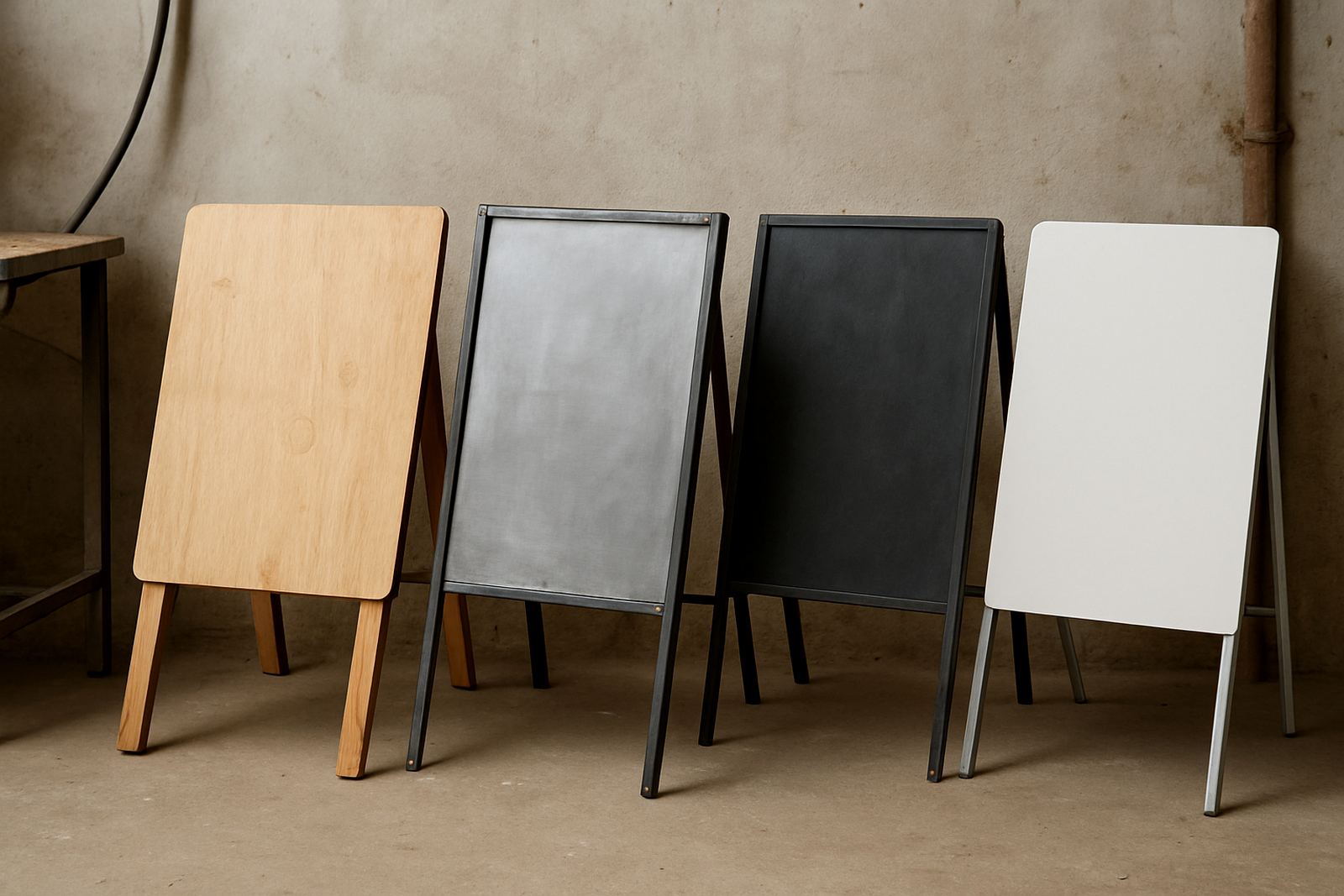
The right board starts with where the sign will sit and how long it needs to stay up. A one-week promo outside a shop in Paarl has very different needs from a permanent safety notice at a warehouse in Wellington or a menu board in a reception area. Wind, sun, coastal moisture, cleaning, and the chance of someone bumping the sign all matter.
Before you choose a material, answer these basics: Will it be indoors or outdoors? Does it need to be moved often? Must it stay flat in heat? Will it be drilled, glued, or framed? Once those points are clear, the best material usually becomes obvious and you avoid paying for more than you need.
- Short term: choose a lighter board that prints well and is easy to replace
- Medium term: choose a board that resists bending and handles outdoor use
- Long term: choose a harder facing that can take weather and regular cleaning
Correx for promotions, estate boards and temporary notices
Correx is a fluted plastic board that works well for short-term outdoor signs, event notices, election-style messaging, open day signage, and temporary site boards. It is light, affordable and easy to fit with cable ties or screws. If you need several signs for different streets or stands, correx keeps the cost manageable.
It is best when the sign must be seen clearly but does not need a polished finish. Correx can flex in strong wind if it is too large or fixed poorly, so it should be supported correctly. In hot sun it can bow a little, and if it sits in a very exposed spot for months, it is better to upgrade. For temporary work, though, it is one of the most practical choices.
- Good for: temporary site notices, estate boards, promotions and directional signs
- Thickness usually used: 3 mm to 5 mm
- Best fixing method: screws, washers, clips or cable ties
- Watch out for: strong wind, long sun exposure and poor edge support
Foam board for indoor displays and neat presentation
Foam board is the better choice when the sign must look neat indoors and stay light enough for easy hanging or mounting. It is often used for presentations, exhibition panels, reception graphics, menu boards, classroom notices and display pieces. The surface prints cleanly and gives a smooth appearance for lettering, photos and branded graphics.
Foam board is not meant for weather. If it gets damp or sits in a humid area without protection, the board can swell or warp. For that reason it is better for indoor spaces, covered walkways or short events under shelter. If you want a cleaner finish, lamination can help with handling and scuff marks, but it still should not be treated like an outdoor board.
- Good for: indoor displays, exhibitions, menus and wall-mounted graphics
- Best in: offices, schools, shops and event venues
- Useful finish: lamination for extra handling protection
- Avoid: rain, direct moisture and unprotected outdoor use
Aluminium for durable outdoor signage and safety signs
Aluminium is the stronger choice for signs that need to stay outside and keep their shape. It does not absorb moisture, it handles sun better than softer boards, and it suits safety signs, directional signs, gate notices and business premises that need a long service life. In places with heat, dust or damp conditions, aluminium holds up better than many lighter boards.
This material is also a good choice where the sign will be mounted permanently to a wall, pole or frame. It has a solid feel and can be used for a clean corporate finish. For areas near the coast or where signs get washed regularly, aluminium is often the sensible option because it stays flat and is easier to maintain. If the sign must be visible from a distance, a firm substrate also helps keep the graphics looking crisp.
- Good for: permanent outdoor signs, safety notices and directional boards
- Best in: sunny, windy or humid conditions
- Common use: wall signs, gate signs and industrial notices
- Useful for: places that need regular cleaning or long-term visibility
Acrylic for polished interior signs and premium displays
Acrylic is used when the sign needs a cleaner, more polished appearance. It suits reception signs, office branding, directional plaques and display pieces where a harder, gloss finish is preferred. It can be clear, coloured or printed with backing, and it gives a more refined look than a simple board.
It works well indoors and in covered areas, but it should be handled with care because scratches show more easily than on some other materials. If the sign is going into a place with frequent cleaning, finger marks or public contact, the finish and fixing method need to be planned properly. For clients who want a more premium look without making the sign overly heavy, acrylic is often the right answer.
In shops and offices across Paarl and Wellington, acrylic is often chosen for logos, room markers and branded panels where first impressions matter. It is not the cheapest option, so it makes sense where presentation is a priority.
How to choose the board before you place an order
A good board choice saves time, avoids reprints and reduces call-backs later. If you are not sure, use this simple check before sending artwork or requesting a quote. It helps with accuracy and avoids problems such as a sign too heavy for the wall, too weak for the wind, or not suitable for the finish you want.
- Step 1: confirm indoor or outdoor use
- Step 2: check the size and how it will be fixed
- Step 3: decide how long the sign must last
- Step 4: note any moisture, heat or wind exposure
- Step 5: choose the finish, such as printed only, laminated or mounted
- Step 6: send correct artwork and ask for an artwork check if needed
If a sign must be moved often, choose something light. If it must stay outside for months, choose a stronger board. If it must look neat in a reception or showroom, acrylic or foam board may be better. For safety notices and site direction, legibility and durability should come first, not price alone.
A quick checklist before printing and fitting
Use this final checklist before you approve the job. It helps keep the message readable and the fitting suitable for the space. In the Boland, weather and site conditions can change quickly, so it is worth checking the details before production starts.
- Will the sign face full sun, shade, wind or moisture?
- Does it need to be removed later without damage?
- Is the wall, pole or frame strong enough for the board?
- Do you need holes, standoffs, adhesive or a fitted frame?
- Should the sign be laminated for extra protection?
- Is the content still correct, including phone numbers, hours and directions?
When the board material matches the location and the message, the result lasts longer and looks better. That is the aim, whether you need one replacement sign or a full set across several sites in Paarl, Wellington, Stellenbosch, Franschhoek, Worcester, Malmesbury or nearby towns.