What contra vision actually does on glass
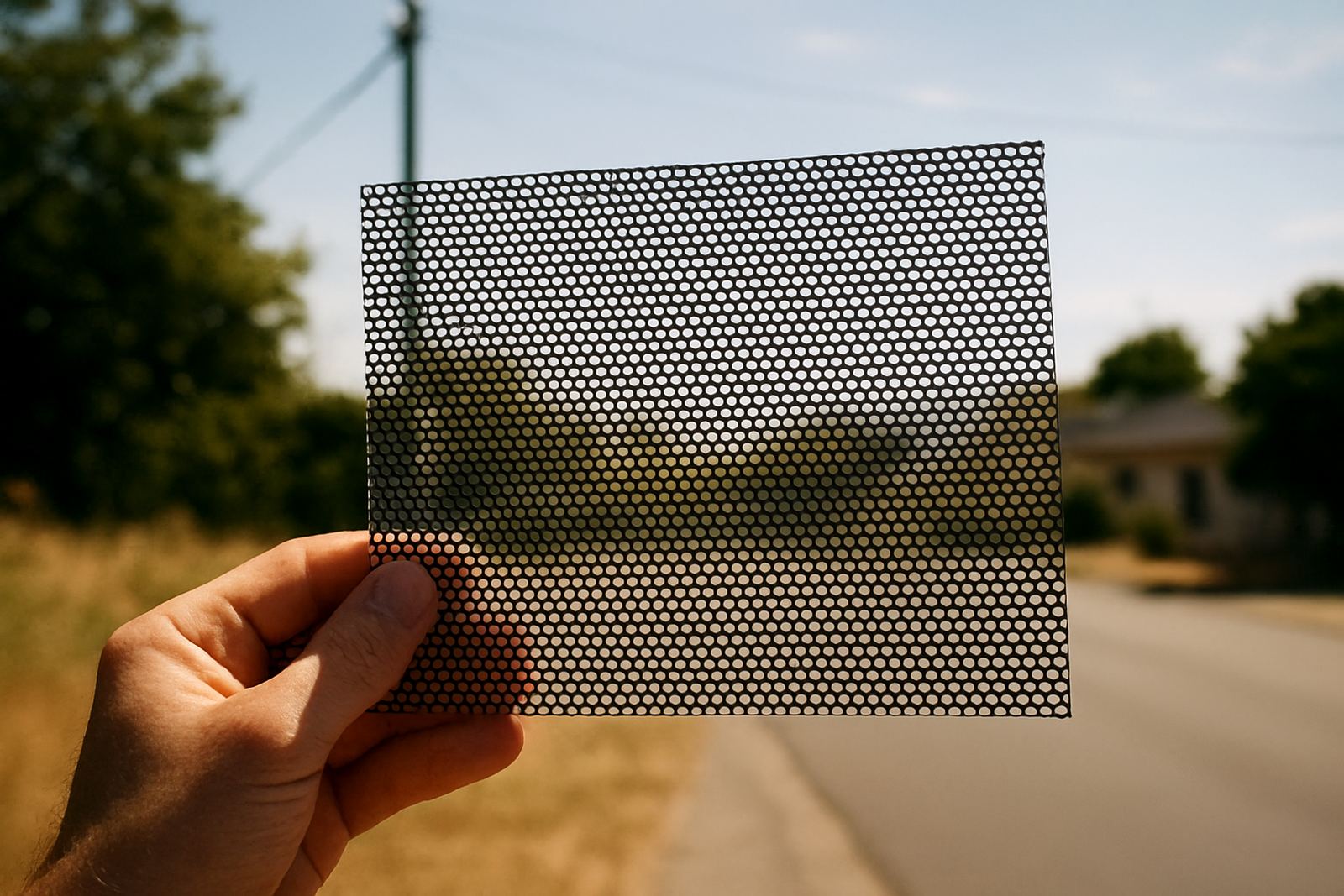
Contra vision is a vinyl film with tiny holes punched through it in a regular pattern. From the outside, those holes blend into the printed image so the eye reads your logo, message or artwork as one solid graphic. From the inside, you can still see out through the perforations. That is why it works well on shopfront windows, glass doors and the rear glass of bakkies, vans and cars.
The key is balance. If the print is too dark or the perforation pattern is too fine, visibility drops. If the image is too light, the branding can look washed out in bright Paarl sun. Good artwork setup matters here, especially for a window facing afternoon light or a vehicle that spends long hours on the road between Paarl, Wellington and Stellenbosch.
For many businesses, contra vision is a simple way to use glass without blocking it off completely. You keep daylight coming in, reduce direct sight into the space, and still get a useful advertising surface.
Where it works best in the Boland
In the Boland, contra vision suits places where glass is part of everyday business. A salon in Franschhoek may want privacy for clients without closing off the front window. A warehouse in Worcester may need branding on a glazed entrance and a bit of sun control. A driver in Malmesbury may want to advertise while keeping the rear window usable from the inside.
It also helps in coastal or dusty conditions where you want a graphic that can be cleaned properly. Unlike some temporary coverings, a correctly fitted perforated film can be maintained with ordinary care. It should still be checked after strong wind, heat or regular washing, because edge lift can happen if the surface was not cleaned well before fitting.
- Shop windows that face street traffic
- Office glass where staff still need outward visibility
- Rear vehicle windows on delivery vehicles and work bakkies
- Glass doors at reception areas or service counters
The print choices that affect visibility
The design on contra vision is not only about colour and branding. It also needs to be set up with the hole pattern in mind. Large areas of solid dark ink can reduce inward visibility more than many people expect. Fine text can disappear if it is too small. A cleaner layout usually performs better than a crowded one.
For vehicle glass, you also need to think about the angle of view. A rear window graphic is seen from behind in traffic, often at a distance and sometimes in low light. Strong logos, short messages and clear contact details work better than long paragraphs. On shop windows, a stronger visual can help passers-by notice the space from the pavement or from across the road.
- Use bold logos and short messages for rear vehicle glass
- Keep important text large enough to read from a few metres away
- Leave enough open area for inside-out visibility
- Choose image contrast that still reads in bright sun
Fitting it properly on windows and vehicles
Good contra vision depends on careful surface preparation. Glass must be clean, dry and free of polish, dust or old adhesive. On vehicles, that means paying attention to window seals, curves and edges. On buildings, it also means checking for tint, humidity and any local dust that may have settled during a windy afternoon. If the glass is not cleaned properly, the film can fail at the corners first.
Installation also needs the right alignment. A window graphic that sits crooked will be obvious from the road and from inside the building. On vehicle glass, the installer must work around heated rear windows, wipers and any taper in the glass shape. In Paarl, where the temperature can change quickly through the day, careful fitting helps avoid bubbles and premature lift.
- Measure the full visible glass area before printing
- Check for rear window heating elements or existing tint
- Allow correct curing time before washing the vehicle or touching the edges
- Ask for artwork checks before print so text and logos sit correctly
What to consider before you choose contra vision
Before you commit, think about the actual job you need the film to do. If privacy is the main aim, a perforated graphic can help without making the space feel closed in. If the goal is advertising, make sure the message can be understood quickly from outside. If the surface is a rear vehicle window, check whether the driver still needs a clear view for reversing and road use.
There is also the question of compliance. For some vehicles and sites, the amount of coverage and the placement of graphics may be affected by road safety needs, building rules or municipal requirements. It is worth planning the layout properly from the start rather than trying to patch it later. Reprints and updates are easier when the original files were set up properly and the dimensions were recorded.
A practical approach saves time and money. You avoid replacing a graphic because the wording was too small, or because the image blocked too much light in a front office. In other words, the right layout makes the film do its job better.
A local example from Paarl to Wellington
Picture a small service company that works between Paarl and Wellington and uses a bakkie every day. The driver wants the rear window branded, but still needs clear vision for reversing into yards and tight loading areas. Contra vision lets that happen. The logo can be seen by traffic behind the vehicle, while the driver still has usable visibility from inside.
Now think about the same business with a street-facing office window. A printed perforated graphic can show trading hours, services and a neat brand image while keeping some privacy at the counter. That helps when the office is busy and staff need a bit of separation from the pavement outside. It also gives the frontage a more finished look without blocking all the light, which is useful in offices that run with natural light to cut down on daytime electricity use during load-shedding periods.
When the design is planned properly, the same visual style can carry through from the vehicle to the shopfront. That gives the business a more consistent presence across town and on the road, whether it is heading through Klapmuts, Simondium or out towards Worcester.
When contra vision is the right call
Contra vision is a good choice when you need branding on glass and you do not want to block the view completely. It is useful for retailers, workshops, offices, courier vehicles and service teams that spend a lot of time on the move. It is not the answer for every surface, but on windows and rear vehicle glass it is often the most practical option.
If you are comparing it with solid vinyl, think about visibility, heat and daily use. If you are comparing it with plain window tint, think about what you want people outside to see. A good solution depends on the location, the vehicle type and how much of the glass must stay usable. That is why artwork checks, correct sizing and proper fitment matter so much.
For businesses across the Boland, contra vision is a sensible way to turn glass into working space. It advertises, it gives some privacy, and it still lets people look out when they need to.